Skip to content
Tinsel Tote

Cardboard and Acid-Free Ornament Storage

The only boxes that publish an archival claim are made of the material everyone warns you about.

By Scooter M.Published Last verified

Disclosure: buy links on this page go to Amazon and earn us a commission at no cost to you. It does not change what we rank or what we say about it — the full disclosure is here.

Cardboard and Acid-Free Ornament Storage: the picks, ranked
#PickKey specScorePrice
1
612 Vermont Adjustable Acid-Free Ornament Box (54 x 4 in)

612 Vermont Adjustable Acid-Free Ornament Box (54 x 4 in)

Best overall: A mixed heirloom collection where no two ornaments are the same size

54 x 4 in8.2
2
TreeKeeper Deluxe Ornament Keeper (72 x 4 in)

TreeKeeper Deluxe Ornament Keeper (72 x 4 in)

Best for a stack: Archival protection in a space where cardboard would not survive

72 x 4 in8.0
3
612 Vermont Acid-Free Ornament Box (60 x 3 in)

612 Vermont Acid-Free Ornament Box (60 x 3 in)

Best value acid-free: A collection of standard glass balls you intend to keep for decades

60 x 3 in7.9
4
612 Vermont Ornament Storage Box (60 x 4 in)

612 Vermont Ornament Storage Box (60 x 4 in)

Best for 4-inch ornaments: Large ornaments, and collections where acid-free materials matter

60 x 4 in8.2
⚑
Hearth & Harbor Non-Woven Ornament Box (64)

Hearth & Harbor Non-Woven Ornament Box (64)

Skip: Ordinary ornaments in ordinary storage, where archival is not the question

64 ornaments6.4
$17.99Amazon

$24.98 28% off

#ad Buy links go to Amazon and earn us a commission. Prices checked September 27, 2026. Where our feed has no live price the cell reads “Check price” rather than carrying an old number. How we are funded.

Ranked on published manufacturer dimensions and materials, not on testing. We have not tested these — here is what we did instead.

The short answer

There is one archival specification in this category — acid-free — and the boxes that publish it are made of cardboard. The 612 Vermont adjustable box states 100% acid-free crush-resistant cardboard with dividers that slot every 2 inches. If the box has to live somewhere humid, or take a stack, the TreeKeeper Deluxe puts an acid-free lining inside a metal frame instead. And the plastic boxes that open by warning you off cardboard publish no acid claim at all.

What we looked for

This is a materials page, not a capacity page. How many cells you need is worked out on ornament storage by capacity; what follows is what the box is made of and whether that is the right choice.

  1. A published acid-free claim, and its scope. “100% acid-free” is a claim about the whole box. “Acid-free lining” is a claim about one layer. Both are worth having; they are not the same sentence.
  2. The shell, stated. Crush-resistant cardboard, non-woven fabric, or fabric over a frame. This decides where the box can live far more than the price does.
  3. How finely the dividers adjust. Merging whole cells is the norm. One box here configures compartments at 2-inch intervals, which is a different thing.
  4. Access. Removable trays with their own handles, or a front panel, so the bottom layer does not require unpacking the top.
  5. Whether it can take weight. Cardboard cannot, and none of these publishes a load rating.

The boxes compared

Ornament boxes on their published materials
BoxAcid-free claimShellCapacityDivider adjustment
612 Vermont adjustable100%, whole boxCrush-resistant cardboard54 x 4"Slots every 2"
TreeKeeper DeluxeLining onlyFabric on a metal frame72 x 4"Separators per tray
612 Vermont 60 x 3 inAcid-free materialsCardboard, non-woven lined60 x 3"Remove dividers
612 Vermont 60 x 4 in100%, whole boxCrush-resistant cardboard60 x 4"Remove dividers
Hearth & Harbor 64 (skip)None publishedTitle says non-woven; bullet says plastic64Remove dividers

One brand accounts for three of the five rows, and that is not a preference: 612 Vermont is most of what publishes an acid-free claim in this category. The interesting row is the last one, and we will come back to it.

What acid-free buys, and what it does not

Acid-free means the board and paper have been made or buffered so they do not give off the acids that ordinary wood-pulp card does as it ages. In contact with a painted or lacquered ornament over twenty or thirty years, those acids show up as yellowing and dulled color. That is the whole of the benefit, and for an heirloom it is a real one.

It is worth being equally clear about what it is not. Acid-free does nothing about breakage, nothing about damp, and nothing about a bin stacked on top. Those are structural problems with structural answers, covered on how to store glass ornaments. A box can be perfectly archival and still be the wrong box for your garage.

The cheap version of the same idea is acid-free tissue in an ordinary box, which addresses the contact point where discoloration actually starts. That is a genuine upgrade and costs very little. It is not a substitute for keeping the box somewhere dry.

Best overall: the 612 Vermont adjustable box

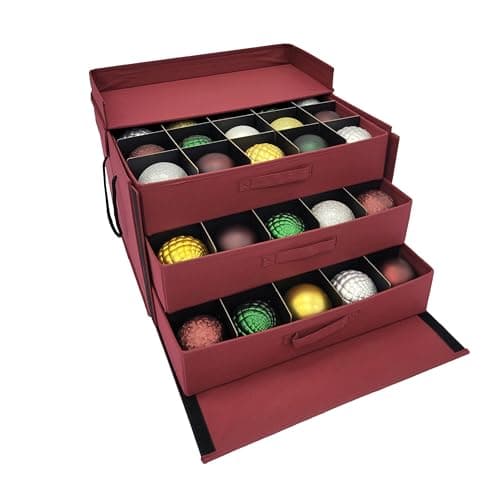
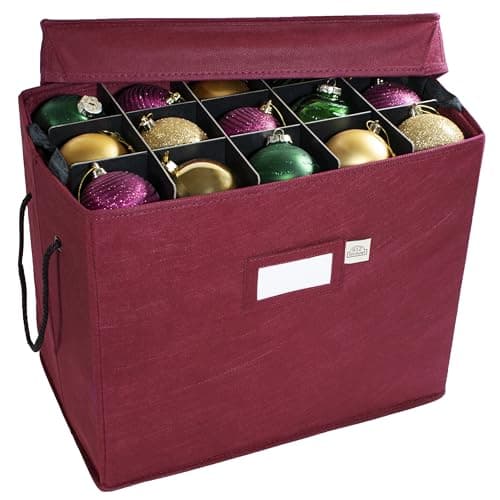
Six trays, each holding nine 4-inch ornaments for 54 compartments, in stated 100% acid-free crush-resistant cardboard lined with non-woven fabric, measuring 26 by 13 by 13 inches. The front panel opens and fastens to the sides, and the top hinges open or lifts off entirely, so you can reach the bottom tray without dismantling the box.

The detail that separates it is the dividers: they slot at every 2-inch interval rather than only at cell boundaries. Every other box in this category adjusts by pulling dividers out to merge whole cells, which gives you 3, 6 or 9 inches and nothing in between. Slots every two inches mean a 5-inch figure gets a 5-inch bay instead of a 6-inch one with padding stuffed around it.

The honest limits are the material and the stack. Cardboard, however crush-resistant, is the wrong shell for an unconditioned space — and at 26 inches wide with 54 compartments, this is also the highest cost per cell of the acid-free boxes here. No load rating is published, so treat it as a top-of-stack box.

Best for a stack: the TreeKeeper Deluxe

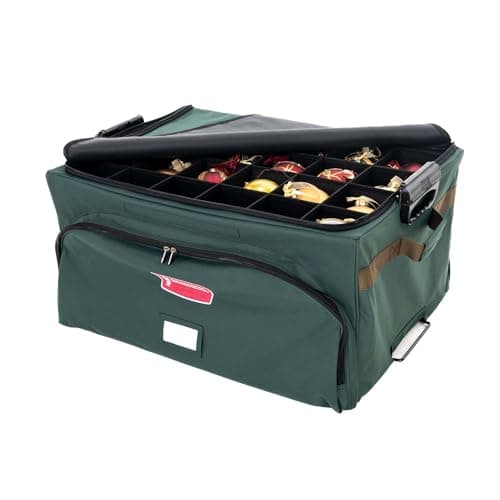
The way around cardboard's weakness without giving up the archival lining. Seventy-two ornaments up to 4 inches across three removable trays, an acid-free fabric lining, a self-standing protective metal frame stated to allow stacking, a large front pocket for the tree skirt or the hook tin, and padded handles.

A metal frame is the only structure on this page that genuinely takes weight. If your storage is a garage shelf where bins go on top of each other, this is the box that survives that arrangement while the cardboard ones do not.

Two caveats worth stating plainly. It is by a wide margin the most expensive box here, and 72 cells for that money is poor value unless the frame is what you are buying. And its acid-free claim covers the lining rather than the whole box, which is a narrower statement than the 612 Vermont boxes make.

Best value acid-free: the 60 x 3 in box

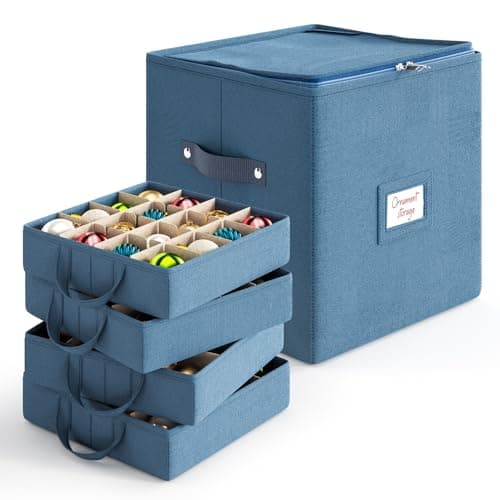
The same acid-free cardboard construction in the size most collections actually need: sixty 3-inch cells across four removable trays, each tray with its own handles, in a box measuring 16.25 by 10 by 13.25 inches. That footprint fits a normal closet shelf, which the 26-inch boxes do not.

Tray handles matter more than they sound. A tray that lifts out and travels to the tree is the difference between unpacking a box and excavating one — the same argument made for trays generally on adjustable dividers versus fixed trays.

It is 3-inch cells, so anything larger costs two cells or does not go in, and if most of your ornaments are bigger the 4-inch version of the same box is the one to buy instead. And it is cardboard: conditioned space only.

Best for 4-inch ornaments: the 60 x 4 in box

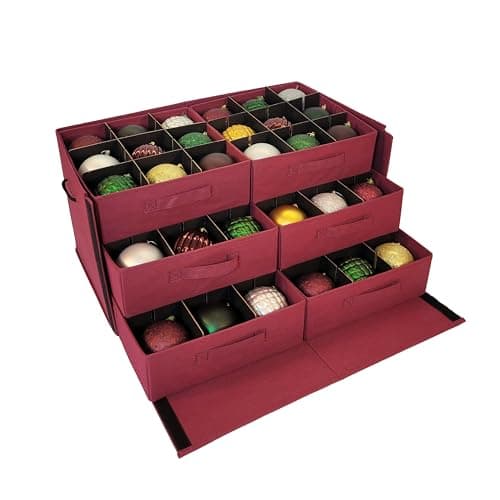
Sixty 4-inch cells across three trays behind an opening front panel, in the same crush-resistant cardboard lined with non-woven fabric and stated 100% acid-free. If your collection skews to larger balls and figures, this is where to start rather than buying 3-inch cells and merging half of them.

You pay for that inch. It is fewer cells than the 3-inch box for more money, in a bigger footprint. That is the trade the whole cell-size question comes down to, and the arithmetic for your own collection is on ornament storage by capacity.

Skip for heirlooms: the non-woven box

On its own terms this is a good cheap box: adjustable dividers with finger slots, a small box for hooks, a card slot for identification, dual zippers, folds flat, and the lowest price on this page. For ordinary ornaments it is a fair buy and we would not argue with it.

It is the skip for this page's question, for two reasons. It publishes no acid-free claim anywhere, which is the entire subject here. And its own listing cannot settle what it is made of: the title says non-woven, while the first bullet describes “premium sturdy, yet flexible plastic”. Those are different materials.

There is an irony worth pointing out, because it is the reason this page exists. That same first bullet opens by telling you not to stuff ornaments into “rickety brown cardboard boxes”. For a box of shatterproof balls, fair enough. For blown glass you intend to hand on, the archival answer the conservation world actually uses is acid-free cardboard — the material the listing is warning you about.

Where the box lives decides more than the box

Every recommendation on this page is conditional on one thing: humidity. Cardboard takes on moisture from the air, softens at the corners, and over enough seasons delaminates. An acid-free box in a damp basement will fail long before it protects anything.

So the rule is simple. Conditioned closet or interior cupboard: buy the archival cardboard, it is the best-specified option in the category. Garage, basement or unconditioned attic: either buy the framed box, or put a cheaper divided box inside a rigid latching bin and spend nothing on archival materials that the environment will defeat anyway. That second arrangement is the one recommended throughout the ornament storage hub, and the rigidity question itself — which boxes labeled plastic are actually rigid — is on hard plastic ornament storage.

Limits of this page

These are published-specification comparisons, not tests. We have not measured the pH of anything, and nobody here stored a box in a basement for a decade to photograph the result. “Acid-free” on these listings is a manufacturer claim with no standard cited and no certification named, which is worth knowing before paying a premium for it.

The category is also narrow. One brand publishes most of the acid-free claims on the market, so three of five picks here share a maker — that is what the shelf looks like, not a preference. If your ornaments are replaceable, none of this matters and the cheap box at the bottom of the table is the right purchase.
What to buy for this

The products that answer the question above, with the manufacturer's published numbers and what each one costs you.

612 Vermont Adjustable Acid-Free Ornament Box (54 x 4 in)

1. Best overall

612 Vermont Adjustable Acid-Free Ornament Box (54 x 4 in)

The most configurable archival box in the category: 100% acid-free crush-resistant cardboard, six trays of nine 4-inch compartments, and dividers that slot at every 2 inches rather than at fixed cells.

Published specifications

Capacity
6 trays, each holding 9 ornaments of 4 in: 54 compartments612 Vermont listing, Amazon
Divider adjustment
Slots at every 2 in interval, so compartments are configured rather than merged612 Vermont listing, Amazon
Materials
Stated 100% acid-free; crush-resistant cardboard lined with non-woven fabric612 Vermont listing, Amazon
Access
Front panel opens and fastens to the sides; top hinges open or lifts off entirely612 Vermont listing, Amazon
Box dimensions
26 x 13 x 13 in612 Vermont listing, Amazon

What it gets right

  • Two-inch divider increments are finer than anything else here, so an odd-sized piece gets a bay its own size
  • A front panel plus a removable top means the bottom tray is reachable without lifting the ones above it
  • States 100% acid-free rather than mentioning acid-free tissue and leaving the box unexplained

What it costs you

  • Cardboard is the wrong shell for a garage, a basement or an unconditioned attic, whatever the lining
  • Highest cost per compartment of the acid-free boxes here
  • No stacking or load rating published, and a cardboard box is the one you do not want at the bottom of a stack

Do not buy it if: The box will live anywhere humid. Buy a rigid outer bin and put a cheaper divided box inside it.

TreeKeeper Deluxe Ornament Keeper (72 x 4 in)

2. Best for a stack

TreeKeeper Deluxe Ornament Keeper (72 x 4 in)

Acid-free lining without the cardboard: a self-standing metal frame that stacks, three removable trays for 72 ornaments up to 4 inches, and a front pocket for the skirt and hooks.

Published specifications

Capacity
Up to 72 ornaments of 4 in, across 3 removable traysTreeKeeper listing, Amazon
Lining
Acid-free fabric liningTreeKeeper listing, Amazon
Frame
Self-standing protective metal frame, stated to allow stackingTreeKeeper listing, Amazon
Extras
Large front pocket for a tree skirt, stockings or hooks; padded handlesTreeKeeper listing, Amazon
Box dimensions
20 x 18 x 18 inTreeKeeper listing item dimensions, Amazon

What it gets right

  • A metal frame is the only structure here that genuinely takes a stack, which no cardboard box does
  • Acid-free lining with 4-inch capacity, so larger ornaments are not a compromise
  • The front pocket takes the skirt and the hook tin, which otherwise end up loose in a bin

What it costs you

  • The most expensive ornament box on this page by a wide margin
  • Acid-free is stated for the lining, not for the whole box, which is a narrower claim than 100% acid-free
  • Seventy-two cells for that price is poor value unless the frame and the stacking matter to you

Do not buy it if: The box lives on a closet shelf where nothing stacks on it. You are paying for a frame you will not use.

612 Vermont Acid-Free Ornament Box (60 x 3 in)

3. Best value acid-free

612 Vermont Acid-Free Ornament Box (60 x 3 in)

The same acid-free cardboard construction sized for standard 3-inch balls: four removable trays with their own handles, sixty cells, and the smallest footprint of the archival boxes.

Published specifications

Capacity
60 ornaments of 3 in across 4 removable trays612 Vermont listing, Amazon
Materials
Acid-free materials; durable cardboard lined with non-woven612 Vermont listing, Amazon
Box dimensions
16.25 x 10 x 13.25 in612 Vermont listing, Amazon
Dividers
Adjustable: remove a divider or two per tray for a larger ornament612 Vermont listing, Amazon
Handling
Trays have their own handles; exterior braided carrying handles and an ID tag612 Vermont listing, Amazon

What it gets right

  • Cheapest route to a published acid-free box, at about half the adjustable model
  • Handles on the trays themselves, so a tray goes to the tree rather than the whole box
  • At 16.25 by 10 inches it fits a normal closet shelf, which the 26-inch boxes do not

What it costs you

  • Three-inch cells, so anything larger costs you two cells or does not go in
  • Cardboard again: conditioned space only
  • Sixty cells is modest for the price once you compare it with non-archival boxes

Do not buy it if: Your ornaments are mostly over 3 inches. Buy the 4-inch version of the same box instead of losing half the cells to merging.

612 Vermont Ornament Storage Box (60 x 4 in)

4. Best for 4-inch ornaments

612 Vermont Ornament Storage Box (60 x 4 in)

Sixty four-inch cells across three trays, behind a front panel that opens. It is honest about being crush-resistant cardboard rather than plastic, and it is the only box here built around 4-inch ornaments.

Published specifications

Box dimensions
21.25" x 17.25" x 13"612 Vermont listing, Amazon
Capacity
3 trays holding 20 ornaments of 4" each, 60 compartments total612 Vermont listing, Amazon
Construction
Crush-resistant cardboard lined with non-woven fabric612 Vermont listing, Amazon
Materials
Stated 100% acid-free, to prevent discoloration612 Vermont listing, Amazon
Access
Front panel opens and secures with touch fasteners; lids do the same612 Vermont listing, Amazon
Handling
Identification tag and braided rope handles612 Vermont listing, Amazon

What it gets right

  • Built for 4-inch ornaments rather than the 3-inch cell everything else assumes, which is the single most common fit failure in this category
  • States acid-free materials, which matters over decades on painted and gilded finishes and which almost nobody publishes
  • The front panel means you reach the bottom tray without lifting the two above it

What it costs you

  • It is cardboard and says so: crush-resistant, not rigid, and nothing should be stacked on it
  • Sixty cells for the footprint of a box that could hold twice as many 3-inch ones, which is the price of the larger cell
  • The most expensive box on this page by some distance

Do not buy it if: Your ornaments are standard 3-inch balls. You would be paying for cell volume you will not use.

Hearth & Harbor Non-Woven Ornament Box (64)

⚑ Skip this — and here is why

Hearth & Harbor Non-Woven Ornament Box (64)

A capable everyday box that opens its own listing by telling you not to use cardboard. It publishes no acid-free claim, and its title and its bullets disagree about what it is made of.

Published specifications

Capacity
Minimum 64 balls across 4 inner traysHearth & Harbor listing, Amazon
Material
Titled non-woven; the first bullet describes "premium sturdy, yet flexible plastic"Hearth & Harbor listing, Amazon
Acid-free
Not publishedHearth & Harbor listing, Amazon
Box dimensions
13 x 13 x 12 inHearth & Harbor listing, Amazon
Extras
Adjustable dividers with finger slots, a small box for hooks, card slot, dual zipper, folds flatHearth & Harbor listing, Amazon

What it gets right

  • Genuinely well equipped for the money: hook box, card slot, finger slots on the dividers, folds flat
  • Cheapest box on this page, by a distance

What it costs you

  • No acid-free claim anywhere, which is the entire subject of this page
  • The title says non-woven and the first bullet says plastic; those are different materials
  • It opens by warning against "rickety brown cardboard boxes" while the archival answer for heirlooms is acid-free cardboard

Do not buy it if: You are storing anything you would be upset to see yellow. For everything else it is a fair buy, and it is the right box for ordinary ornaments.

Questions people ask

Are cardboard ornament storage boxes any good?
For heirlooms in conditioned space, they are the best option published. Acid-free is the only archival specification this category offers, and the boxes that publish it are crush-resistant cardboard lined with non-woven fabric. For a garage, a basement or an unconditioned attic they are the worst option, because cardboard takes on humidity, softens at the corners and eventually delaminates.
What does acid-free actually do for ornaments?
It prevents the slow discoloration that ordinary paper and card cause over decades. Ordinary tissue and carton board are mildly acidic; in contact with painted or lacquered surfaces over twenty or thirty years that shows as yellowing and dulled paint. It does nothing for breakage, nothing for damp and nothing for crushing -- it is a chemistry spec, not a protection spec.
Is an acid-free box worth the extra money?
It depends entirely on what is in it. For blown glass from a grandparent, yes -- the box costs a fraction of what replacing one ornament would, and nothing else on the market publishes the claim. For a boxful of shatterproof balls from a big-box store, no. Buy the cheap divided box and spend the difference on nothing.
Can I use acid-free tissue in an ordinary box instead?
Largely, yes, and it is the cheap version of the same idea. Acid-free tissue between the ornament and the divider addresses the contact point, which is where discoloration starts. What it does not fix is a box that softens in a damp attic. Tissue is a good upgrade to a cheap box; it is not a substitute for dry storage.
How adjustable are the dividers on these boxes?
More adjustable than the usual merge-four-cells arrangement. The 612 Vermont adjustable box states slots at every 2-inch interval, so a compartment is configured to a size rather than built out of whole cells. The others adjust by removing a divider or two per tray, which merges cells in the standard way.
Do acid-free boxes stack?
Cardboard ones should not be stacked under weight, and none of them publishes a load rating. If stacking matters, the TreeKeeper box is the one with a self-standing metal frame stated to allow it. Otherwise put the archival box on a shelf, or inside a rigid latching bin, which is the arrangement we recommend for fragile storage generally.

Sources