The short answer
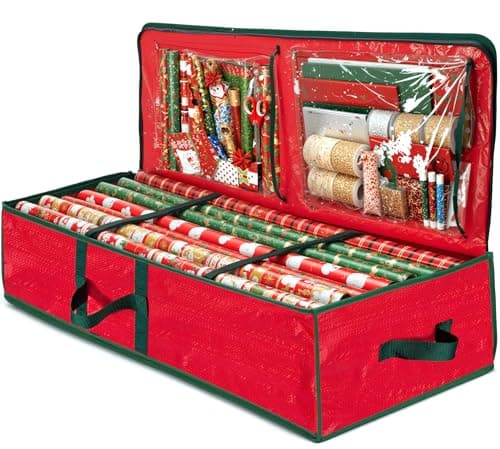
Measure from the floor to the underside of your bed rail. Six inches or more and the Zober fits; five and a half and you need the Handy Laundry. If neither fits, wrap stores upright behind a door or on top of a wardrobe better than almost anything else, because it is long, thin and light.
The four spaces, with their numbers
Small-space storage options and what each takes| Space | Usable clearance | Holds | Format |
|---|
| Under a bed | 6-8 in high | 18 to 24 rolls | Flat fabric organizer |
| On top of a wardrobe | 12-24 in high, 60+ in long | A full container, plus more | Any flat organizer |
| Behind a door | 3-4 in deep, 60+ in high | 4 to 6 rolls upright | Over-door or slim vertical |
| Closet corner, upright | 12 in square footprint | 8 to 12 rolls upright | Tall container or bin |
Under the bed, measured properly
Measure from the floor to the underside of the frame rail, not to the slats. The rail is the lowest obstruction and it is what the container has to pass under. Standard frames give six to eight inches; platform beds and older wooden frames can give less.
The published heights matter here more than anywhere: Handy Laundry publishes 5.5 inches, Zober publishes 6, and the Sterilite rigid under-bed box publishes 7. Half an inch decides it, and all three publish the figure, which is unusual and welcome.
The trade-off between fabric and rigid under a bed is that fabric goes longer — 40.5 inches against 37 3/8 — and rigid resists being stepped on. Rigid also rolls out on wheels rather than dragging on carpet, which matters if you get in there often. More on what else wants that space at under-bed holiday storage.
On top of a wardrobe
The most underused storage in a bedroom. Twelve to twenty-four inches of dead air above the hanging rail, running five or six feet. A 40-inch wrap organizer fits with room to spare, and so does a tree bag, which is why the same space comes up on storing a tree in a small apartment.
Two cautions. It is dusty, so the container needs a closed lid rather than an open tray. And it is high, so the container needs to be light enough to lift down at arm's length — wrap is, which is why this space suits it better than it suits bins.
Behind a door
The three or four inches between an open door and the wall is dead space in almost every room. A slim vertical container standing there takes four to six rolls upright, which is not much, but it is enough for the everyday paper you reach for in March.
Upright is also the orientation that keeps a roll round, though it puts the weight of the stack on the bottom edge of each roll — the trade, and the over-door bag that publishes twelve 40-inch rolls in five inches of depth, is on hanging and upright wrap storage. The rest can lie flat under the bed.
Splitting the collection is not a failure
The instinct is to find one container that holds everything. In a small home, two containers in two different dead spaces is frequently better: the seasonal bulk flat under the bed, the three rolls you actually use standing behind a door.
It also solves the sorting problem for free, because the paper you need in March is not buried under the paper you need in December. The general labeling and access principle is on labeling so you find it next year.